
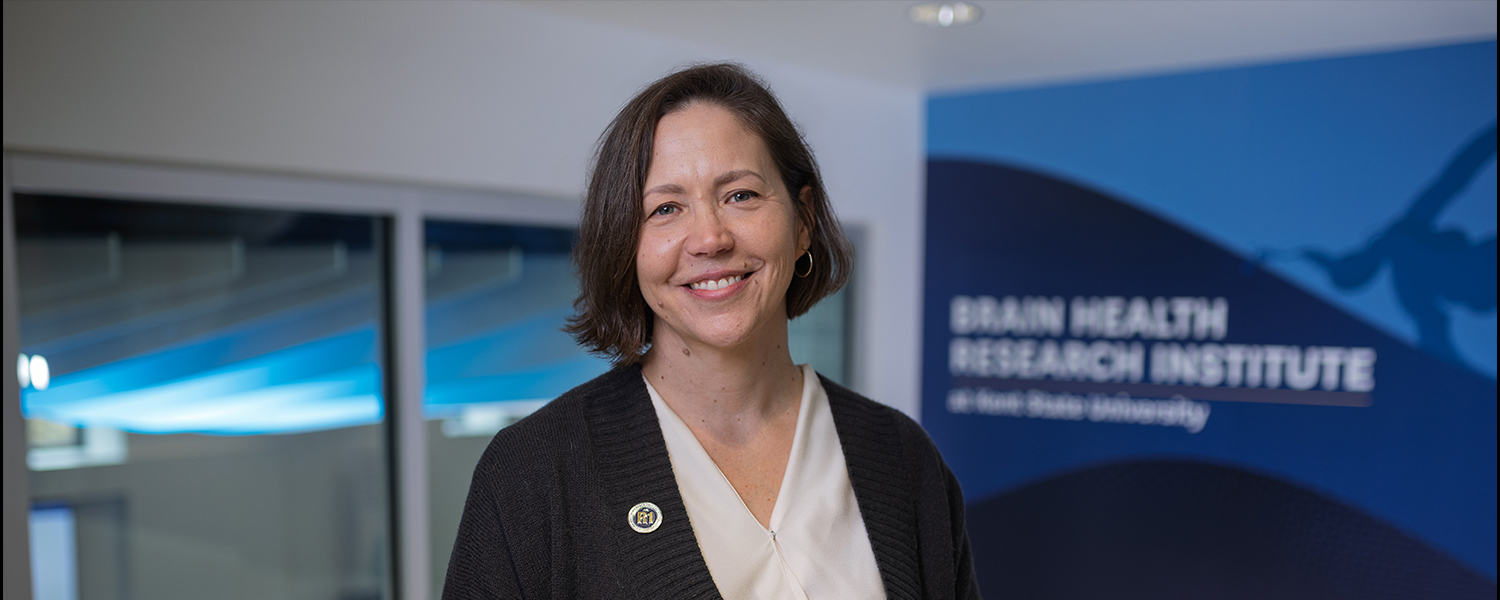
Psychological Sciences Professor Karin Coifman, Ph.D., has been named the new director of 5X社区鈥檚 Brain Health Research Institute (BHRI).
Coifman, who is bringing her years of expertise as one of the university鈥檚 top researchers to her new role, told Kent State Today that she was grateful for her new role and excited about the institute鈥檚 future.
鈥淚 look forward to serving all BHRI members and the broader Kent State research community to meet the primary mission of the institute: to support and to drive interdisciplinary and impactful research on brain health,鈥� she said.
Coifman is only the second head of the institute, succeeding inaugural director Michael Lehman, Ph.D., who resigned in January after seven years at the helm.
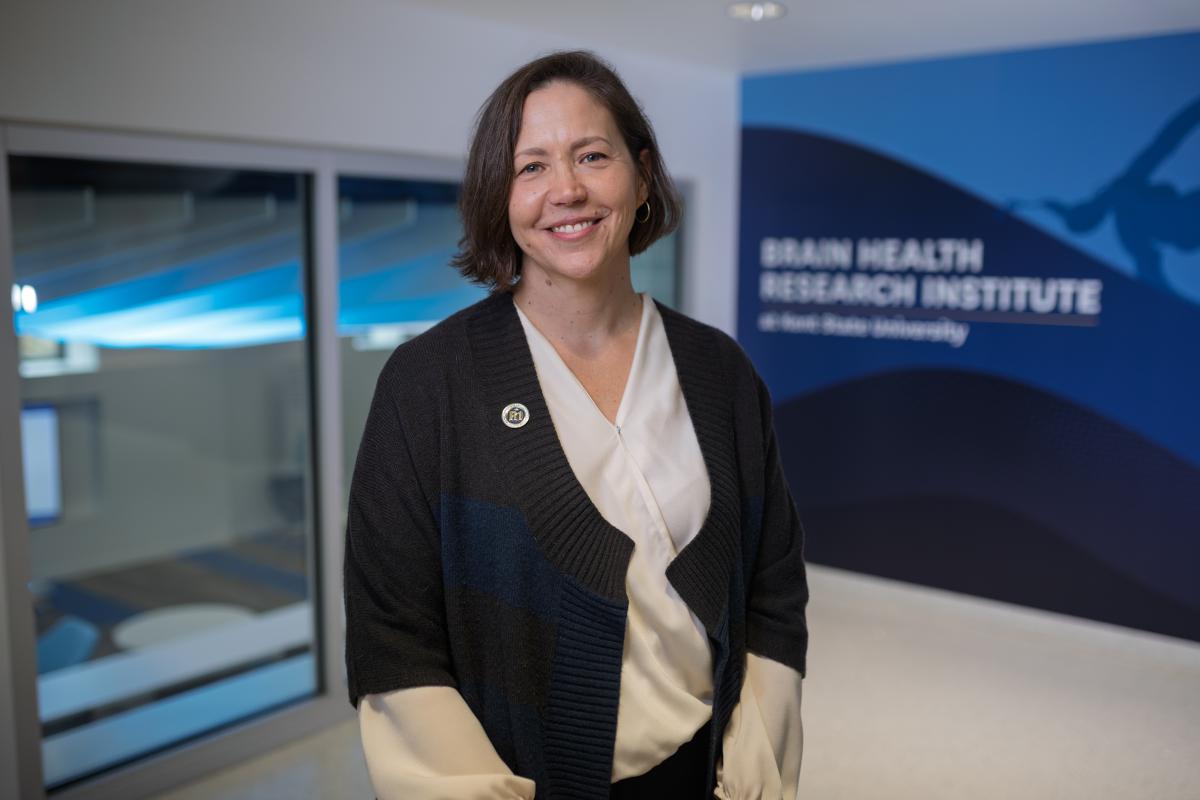
Doug Delahanty, Ph.D., vice president for research and economic development, said he was excited to see Coifman poised to carry out the institute鈥檚 mission well into the future.
The search for a new director, he said, included several exceptional faculty applicants, and their enthusiasm for the institute heartened him.
鈥淲ith Dr. Coifman鈥檚 leadership, I am confident we will build on the collective commitment and passion of the entire brain health community to advance to the next phase of the institute鈥檚 development and impact,鈥� he said.
Extensive Research Career
Coifman, a faculty member at Kent State since 2010, specializes in researching stress-linked processes that drive common psychiatric conditions.
鈥淢y lab is focused on understanding pathways of vulnerability for psychiatric disorders,鈥� she said. 鈥淲e look at the intersection of stress and emotion and how that drives the onset of common disorders, including depression, anxiety, substance abuse and eating disorders, as well as post-traumatic stress.鈥�
鈥淎ll of these disorders have disrupted emotion at their core, and all of my work is focused primarily on how stress-linked emotion disruptions drive and maintain disease states,鈥� Coifman said.
Coifman researches a variety of contexts, including severely adverse circumstances but also normal developmental or life circumstances, such as loss of a loved one or the transition to adulthood, she explained.
Student Life Study
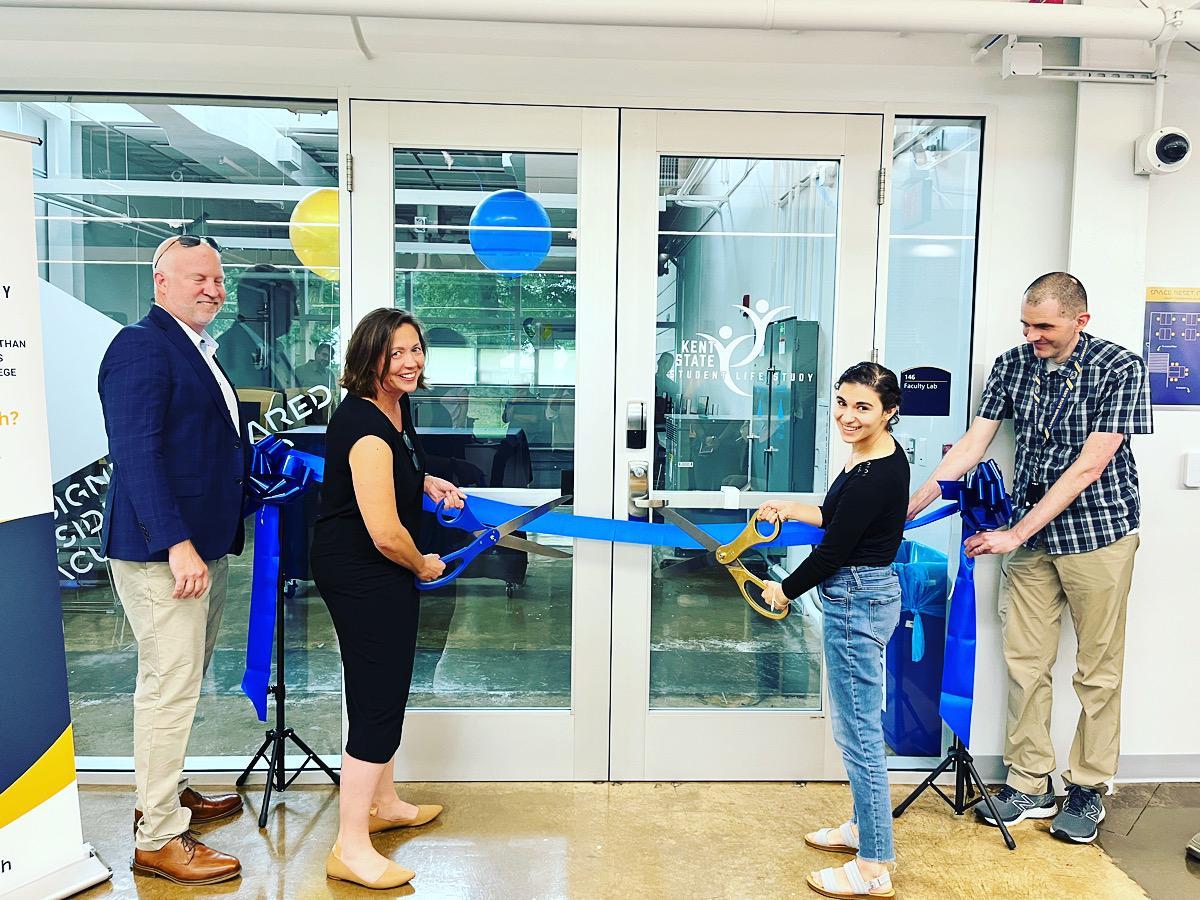
The changes that take place in that transition to adulthood are at the core of Kent State鈥檚 Student Life Study, a groundbreaking study that Coifman co-founded with John Gunstad, Ph.D., professor of psychological sciences.
Now in its third year with more than 3,000 students, the study eventually will scale up to 10,000 participants and will provide useful information to the university to help students thrive, and to provide a platform for faculty and student researchers for scientific investigation of a critical period of transition into adulthood for lifelong health.

Researchers hope the study will generate data for decades to come that will help to improve the scientific understanding of health and well-being during this important developmental period, as well as guide university administrators and policymakers as they make decisions at Kent State and across the country.
Finding funding
Coifman said her work directing the study will continue, but said she pursued the BHRI directorship now because she was at a place in her career where she is interested in helping to facilitate and support others in their research.
鈥淚 have been successful in having my lab funded in lots of different ways by many different funders,鈥� she said. 鈥淭hat鈥檚 a skill I have, and I want to share it. I really like facilitating not just my own research but helping others to secure extramural funding.鈥�
Delahanty said Coifman brings extensive experience and success in attracting state and federal research grants to her new leadership role.
鈥淪he will lead our efforts through the institute to substantially increase external funding and to continue leveraging the resources of the institute for the benefit of our entire research community,鈥� he said.
Building Upon a Strong Foundation
Coifman looks at the strong foundation already in place in the BHRI and is excited about the future.
鈥淚 think one of the most special things about the BHRI is how it has not been too siloed in its approach,鈥� she said. 鈥淚 think that science really suffers when people focus too much on staying in their lane. The real potential is its untapped potential to cultivate more cross-collaboration.鈥�
She said the institute has a strong pilot grant program to help young researchers launch their work, and she praised the institute鈥檚 Undergraduate Fellows program as part of the Summer Undergraduate Research Experience program, which gets students involved in research as early as their first year.
鈥淭here are real strengths at BHRI, and I want to build upon them,鈥� she said.
鈥楰ent is a Really Special Place鈥�
Coifman came to Kent State as an assistant professor of psychology in 2010 from Columbia University, where she earned her doctorate in clinical psychology in 2008 and completed a two-year postdoctoral fellowship.
鈥淲hen I came to interview in 2009, honestly, I fell in love with the campus and the department,鈥� Coifman recalled. 鈥淚 remember thinking, 鈥楾his place is amazing.鈥� I was blown away by the environment. There鈥檚 something really special about the psychology department at Kent State. It is a really wonderful place filled with incredible scientists, and it鈥檚 such a collaborative environment.鈥�
Psychology wasn鈥檛 Coifman鈥檚 initial career path. She earned her bachelor鈥檚 degree in English from Yale University in 1996 and then worked for five years for the Maurer Foundation in Melville, New York, a community health nonprofit organization, before deciding to pursue psychology as her chosen field. Coifman said she worked with psychologists at the nonprofit and gained an appreciation for how they thought and approached social problems, many of which she still studies today.
Vision for the future
When Coifman thinks about the future of the institute, she is excited at the prospect of cross collaborations continuing in many areas, but one that is most exciting to her is the field of computational neuroscience 鈥� the marriage of computer science and traditional neuroscience and brain health research.
鈥淐omputer scientists need to be working directly with behavioral neuroscientists or neuroendocrinologists or even folks like me in clinical psychology to understand how things are happening in this incredibly complex way,鈥� she said. 鈥淭he best science comes from cross-cultivation of ideas. People come together who sometimes don鈥檛 speak the same language, but who can work together to solve big problems with complexity and sophistication. And there are tons of big problems to solve.鈥�
Coifman personally has partnered with Kent State computer science Professor Ruoming Jin, Ph.D., who has been able to apply advanced AI-driven modeling to data she had already compiled.
鈥淚t鈥檚 data that I鈥檝e been sitting on that really needs this level of advancement to parse out what鈥檚 actually happening. It鈥檚 very exciting,鈥� she said of the new findings already revealing themselves.
Coifman said the partnership has resulted in new and sophisticated translations of her existing data. When she considers the implications across all science research fields at Kent State, she is inspired by what the future may hold.
The most burdensome psychiatric disorders the world over 鈥� suicide, substance abuse, depression 鈥� are the focus of psychology, neuroscience, nursing and public health research, and despite the attention, continue to grow rapidly, she noted.
鈥淲e are dealing with an epidemic of psychiatric conditions that are enormously problematic,鈥� she said. 鈥淲hat if we could better map the exact processes that go awry, so that we could detect it at a stage where it would be preventable or at least more readily treatable?鈥�
Collaborative and impactful brain health research is the key, she said, because it allows for the development of creative solutions. The results could be a higher level of understanding of how to solve these critical societal problems.
鈥淭here is enormous potential to reduce suffering,鈥� Coifman said.