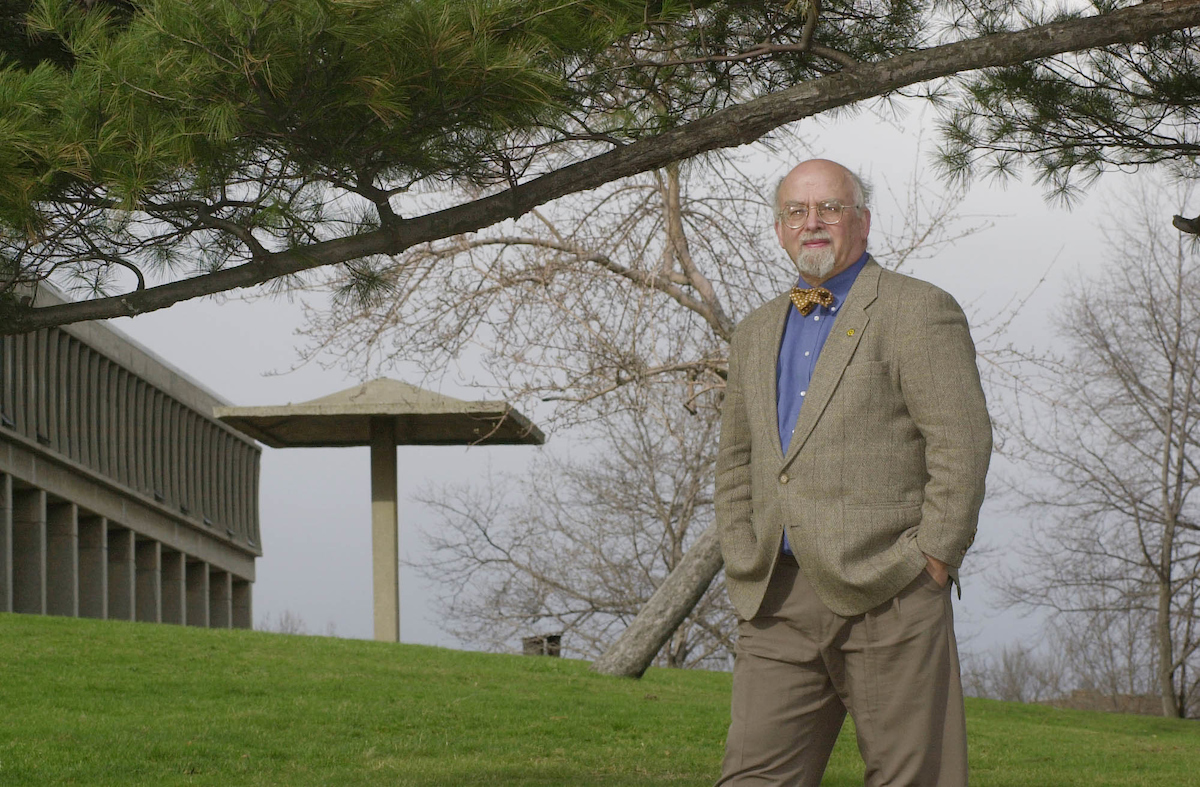
Jerry M. Lewis, Ph.D., 5X社区 Professor Emeritus of Sociology, who served as a faculty marshal during the May 4, 1970, campus shootings and later worked tirelessly to ensure that the legacy of May 4 would endure, died Wednesday, Feb. 11, at his home in Maine. He was 88.
Lewis dedicated his life to teaching, preserving the lessons of history and guiding generations of students with integrity, compassion and unwavering commitment.
In a 2025 interview with Kent State Magazine, Lewis talked of how being present at the shootings necessitated that he become a torchbearer of its legacy.
鈥淗aving witnessed the events firsthand, and having a background in studying crowd behavior, I felt that it was important to not only remember the events but educate students about them and their consequences,鈥� Lewis said. 鈥淲hen people were running from May 4, my research and lectures helped keep not only the memory of the events alive, but factual knowledge that was taught to generations of students.鈥�

Paying tribute
Kent State President Todd Diacon remembered Lewis for his advocacy and commitment to history and truth.
鈥淛erry was a fierce advocate for students, a consummate classroom teacher, an accomplished researcher and a living trustee of history and the search for truth and meaning,鈥� Diacon said. 鈥淗e was the most noble person I have ever worked with in my nearly 40 years in higher education. We will miss him and treasure his memory forever.鈥�
Roseann 鈥淐hic鈥� Canfora, Ph.D., an eyewitness to and survivor of the May 4 shootings, in which her late brother Alan Canfora was injured, said Lewis鈥� advocacy work on May 4 was profound.
鈥淒r. Lewis devoted his life to ensuring that the lessons of May 4, 1970, were studied honestly and taught responsibly,鈥� said Canfora, a professional in residence at Kent State and assistant professor in the School of Media and Journalism. 鈥淔or decades, Jerry stood beside us in the long and often lonely work of teaching the lessons of May 4, 1970 鈥� not as a distant scholar, but as someone who understood that what happened here was not simply history. It was a warning. And a responsibility.鈥�
His loss, Canfora said, feels especially heavy.
鈥淗aving lost the parents of the slain students and, now, four of the nine wounded 鈥� voices central to our long quest for truth and justice 鈥� Jerry鈥檚 passing feels profoundly personal,鈥� she said. 鈥淭he circle of witnesses is slowly narrowing. Each loss is a reminder that those of us who were there will not always be here to tell it. Jerry understood that. Perhaps better than most.鈥�
May 4 Advocate
Lewis served as a faculty marshal on May 4, 1970, when the Ohio National Guard opened fire on students protesting the escalation of the Vietnam War, killing four and wounding nine others. After witnessing the shootings firsthand, Lewis devoted the rest of his life to researching, memorializing and lecturing on the events of May 4.
In 1971, with the help of students, Lewis established the first candlelight walk and vigil, an annual event that begins at 11 p.m. on May 3 and continues until 12:24 p.m. May 4, the time of the shootings. Lewis was one of the four co-authors of the application to add the May 4 site to the National Register of Historic Places, approved in February 2010.
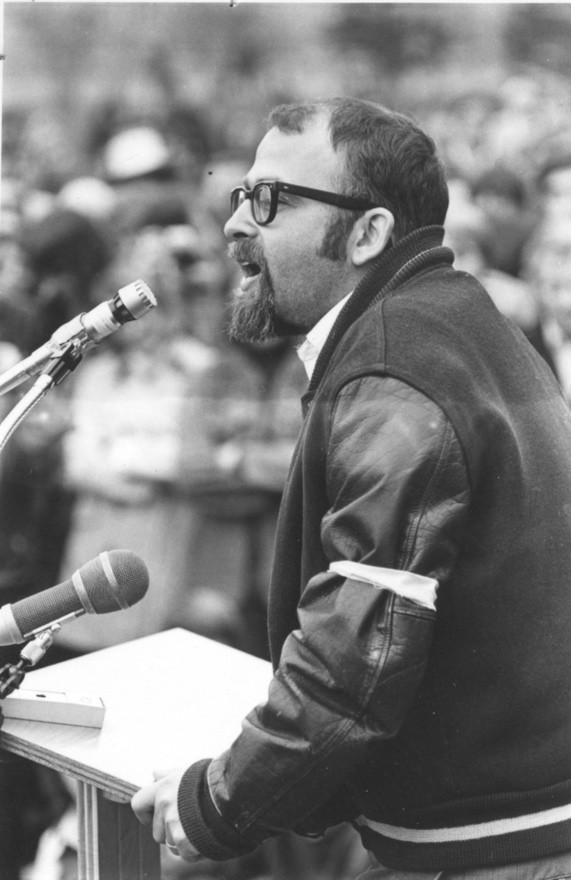
Lewis maintained that teaching about May 4 was the fundamental responsibility of the university. He was committed to honoring those affected by the May 4 shootings and to preserving history with honesty and care.
Molly Merryman, Ph.D., associate professor in the School of Peace and Conflict Studies, and herself a faculty marshal for more than 25 years, told Kent State Magazine in 2025 that she and Lewis shared many conversations over the years, and he remained deeply troubled that the marshals were not able to prevent the shootings.
In Lewis鈥� oral history in the University Archives, he talks about how he did not believe the guards鈥� guns were loaded.
鈥淚t haunted him,鈥� Merryman said. 鈥淗e holds himself accountable for the students he didn鈥檛 save. Jerry dedicated his life to preserving the legacy and honoring and recognizing the lives of the students who were there.鈥�

Lewis also played an integral role in having markers placed on the May 4 site to indicate the location of the nine wounded students, an achievement that came more than 50 years after the shootings. The wounded student markers were installed in 2021 and formally dedicated in 2022.
During interviews at the time of the dedication, Lewis said he hoped that the markers would stimulate further research into May 4, 1970.
鈥淵ou can鈥檛 look at them without wondering why the hell the guard fired,鈥� Lewis said. 鈥淓ach of those markers links people who are real human beings to the tragedy. The slain student markers do that. Now we can stand on 13 different spots, rather than four different spots. Every one of those markers is a story in response to M1 fire.鈥�
Lecture series
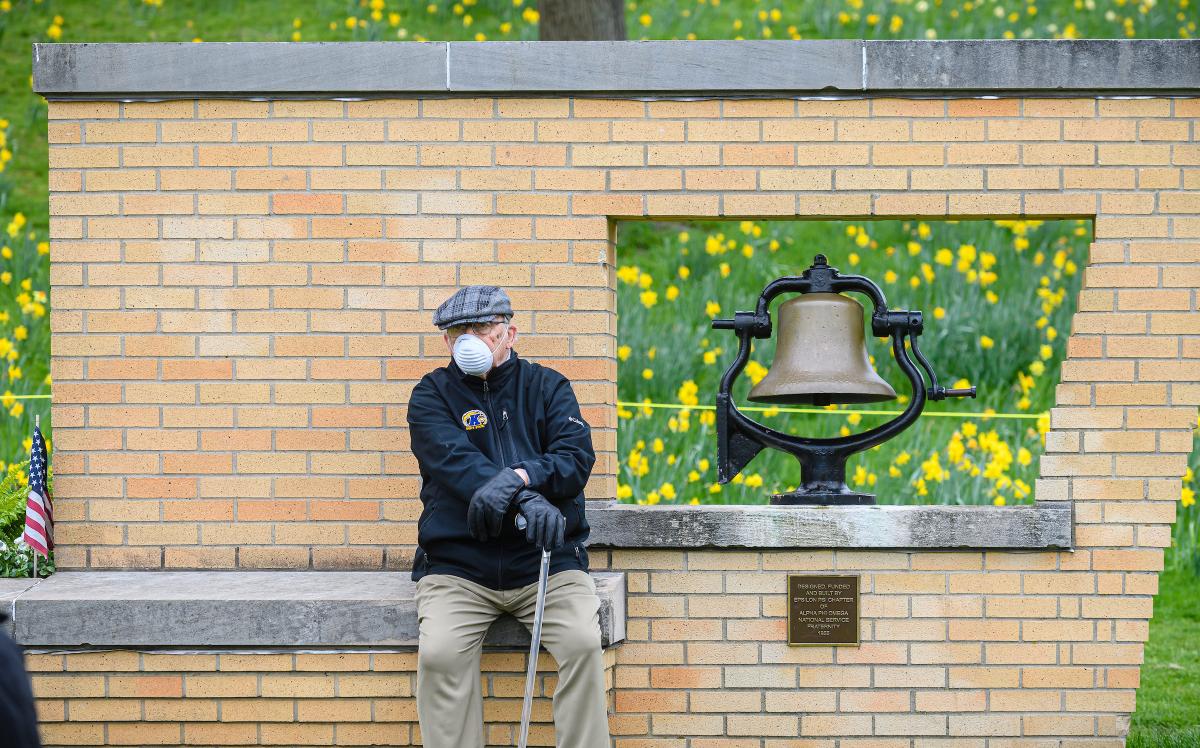
In 2022, Kent State alumnus and former 5X社区 Board of Trustees member Michael Solomon, a 1974 graduate, made a generous donation to endow the Jerry M. Lewis Lecture Series and Luncheon, to honor Lewis鈥� decades of service to the university community and to preserve Lewis鈥� legacy.

A Kent State faculty member is selected annually to give the lecture, based on their research that involves the May 4 Visitors Center and the 5X社区 Libraries鈥� Special Collections and Archives, to advance the scholarship surrounding May 4, its aftermath or the Vietnam era. The chosen lecturer receives a $2,500 honorarium and presents their talk as part of the May 4 commemoration events.
鈥淒r. Lewis played a critical role in saving lives on May 4, 1970, as a faculty marshal. Since that tragic day in American history, Dr. Lewis has been a key proponent of learning lessons of human value from this event,鈥� Solomon said at the time of his endowment.
Canfora said the lecture series will help to keep Lewis鈥� legacy alive.
鈥淭hrough the lecture series that bears his name and the faculty marshal program he helped found to safeguard students鈥� right to dissent, his legacy will continue to guide this campus, protecting both memory and dissent at Kent State,鈥� she said.
Decades of service
Lewis was born April 1, 1937, in Oak Park, Illinois. He received his bachelor鈥檚 degree from Cornell College, a master鈥檚 degree from Boston University and his doctorate in sociology from the University of Illinois in 1966. That same year, Lewis joined the Kent State faculty as an assistant professor of sociology. He was promoted to full professor in 1979, and continued his career at Kent State until 2013, after being named professor emeritus in 1996. For the 2004-05 academic year, Lewis was a visiting professor of sociology at Hiram College.

He was a recipient of the Distinguished Teaching Award at Kent State in 1983 and was selected one of the university鈥檚 10 Outstanding Teachers in 1970, 1981, 1982 and 1983. In 2006, he was named Outstanding Graduate Mentor and received the Graduate鈥檚 Applause Award in 2004 and 2006.
Lewis was also an involved member of the Kent community and, in 1991, was appointed to the Kent City Council.
Author and mentor
A defining accomplishment of his career was 鈥淜ent State and May 4: A Social Science Perspective,鈥� a volume he edited with the late Thomas Hensley, Ph.D., longtime Kent State professor of political science. The book stresses the importance of social science theory and methods in the study of May 4. Lewis also was an author or co-author with Raymond Adamek of several of the articles in the edited volume, which is now in its third edition.
鈥淟ed by Professor Glenn Frank, the faculty members pleaded with National Guard leaders to allow them to talk with the demonstrators, and then they begged the students not to risk their lives by confronting the guardsmen. After about 20 minutes of emotional pleading, the marshals convinced the students to leave the Commons,鈥� Lewis wrote in 鈥淭he May 4 Shootings at 5X社区: The Search for Historical Accuracy,鈥� also co-authored with Hensley.
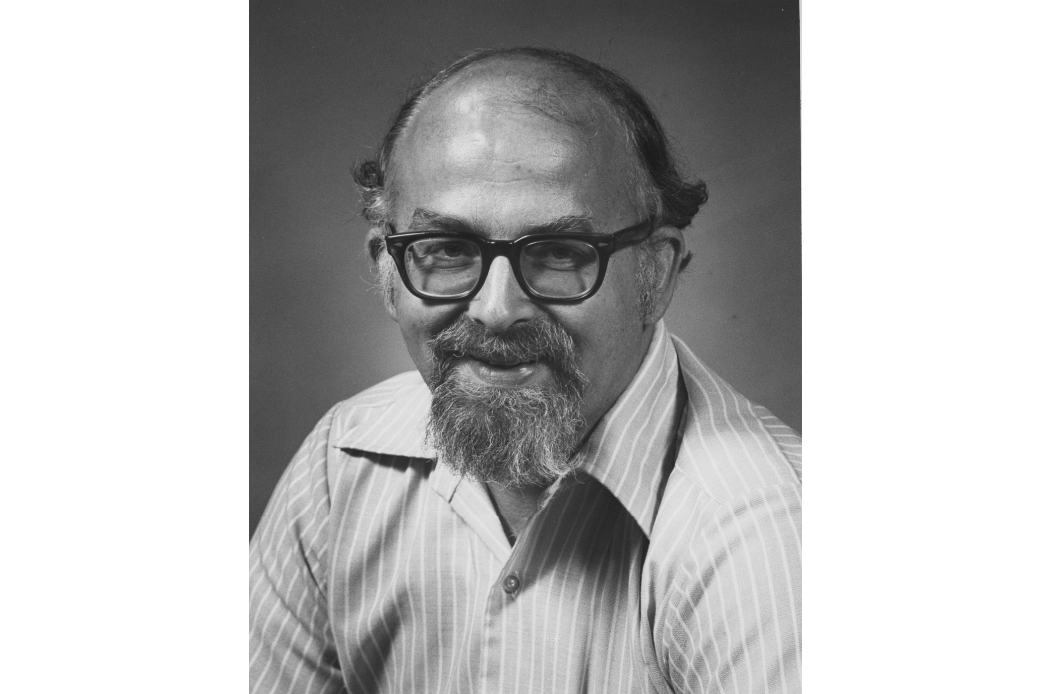
Lewis was inspirational to his colleagues, students and friends, not only through his work and mentorship, but also through the friendship he offered to everyone he met.
In 2025, the May 4 Visitors Center honored him with an exhibit of his personal memorabilia, entitled 鈥淭each Peace: The Life and Legacy of Jerry Lewis.鈥�
鈥淭he exhibit was really about him and his contributions to Kent State through a May 4 lens,鈥� said Alison Caplan, director of the May 4 Visitors Center.
In his 2025 interview with Kent State Magazine, Lewis reflected on his past and said he was satisfied with his life and legacy.
鈥淚 taught all the courses I wanted to teach and had a surprising number of publications. I had great colleagues to work with who inspired my work. I feel like I accomplished all I wanted,鈥� he said. 鈥淎s the landscape of higher education has changed since retiring, I would impart the wisdom to learn everything you can and continue with your scholarship, even in the face of adversity.鈥�
Lewis is survived by his wife, Diane; son, Damon; daughter, Janell; six grandchildren; a great-grandson and a brother.